Addiction Psychologist in Moscow — Consultation with Natalia Zentsova
Professional psychological help for people dealing with alcohol, drug, medication, gambling, or other addictions, as well as for their family members.
Natalia Igorevna Zentsova
Medical psychologist, Doctor of Psychological Sciences
Professor at the Department of Pedagogy and Medical Psychology of Sechenov University · director and chief scientific advisor of the "Nakhabino" center
35,000 ₽ for 60 minutes. Sessions held in person in Moscow and online.
Book a consultation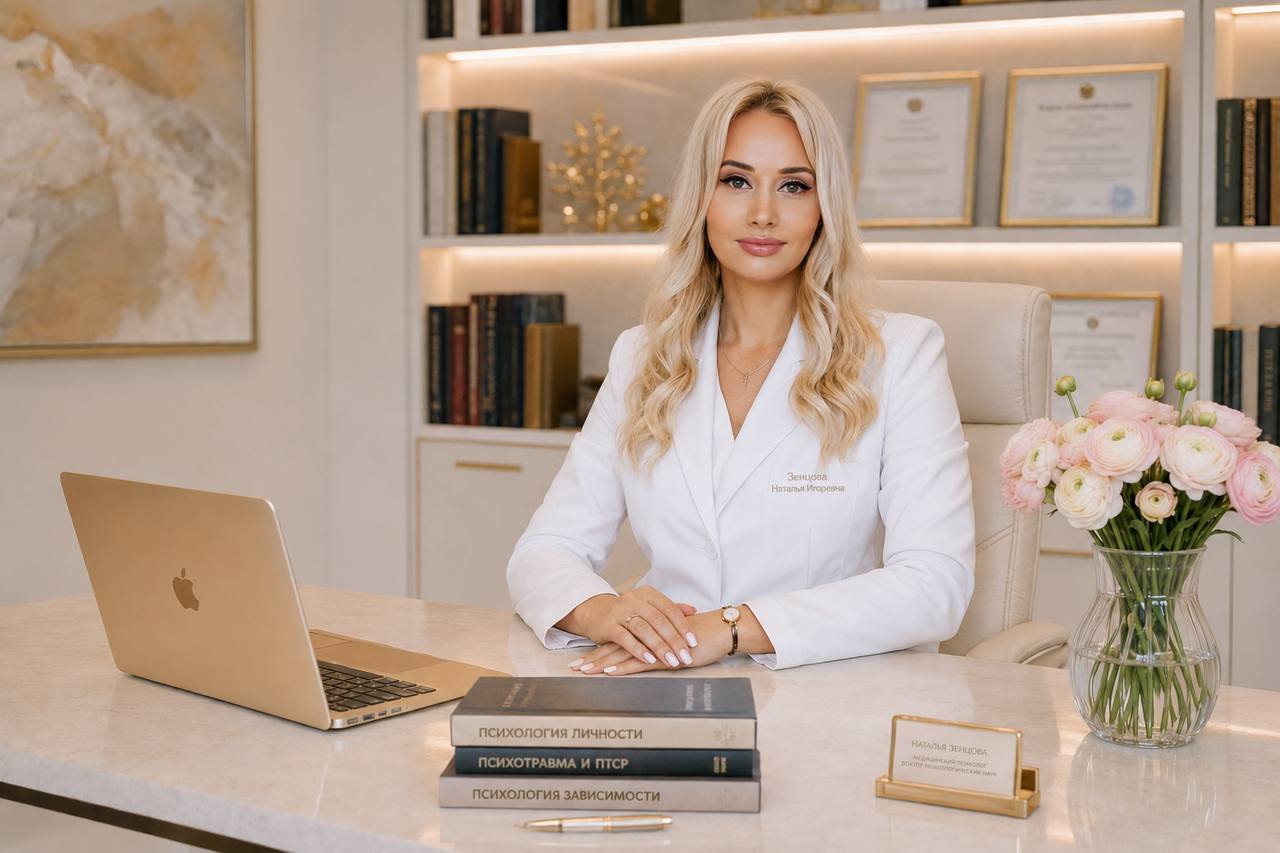
When it's time to see an addiction psychologist
Addiction doesn't always start with daily use and obvious consequences. Often a person keeps working and living their usual life — while gradually losing control over their behavior.
You use alcohol, drugs, or medication more often or in larger amounts than you planned
You regularly promise yourself you'll stop, but go back to using
You experience cravings or constantly think about the next opportunity to use
You use alcohol or other substances to relieve stress, fall asleep, relax, or numb difficult feelings
You've started hiding how much you use from loved ones
You keep using despite problems with health, relationships, work, finances, or reputation
You feel irritable, anxious, low, or have trouble sleeping when you try to stop
Guilt, shame, and promises of "never again" follow after using
People close to you say your behavior has changed
Things you used to enjoy no longer interest you, and using has become tied to trauma, PTSD, depression, loss, loneliness, or burnout
You don't have to wait until the consequences become critical. The sooner a person gets a professional assessment of the situation, the more room there is to preserve health, relationships, career, and the quality of life they're used to.
What kinds of addiction I work with
I work with adults and their family members.
A consultation can be held either for the person dealing with the addiction themselves, or separately for their relatives.
How a psychologist can help with addiction
Addiction affects more than just behavior — it's tied to motivation, emotional regulation, habitual responses to stress, relationships with loved ones, and traumatic experience.
What matters isn't simply forbidding someone from using, but understanding what role it plays in their life.
In the consultation, we work through together:
What function the substance use serves
What situations trigger cravings
What gets in the way of sticking to a decision
What thoughts and states precede a relapse
What self-regulation techniques can be used instead of using
Whether a consultation with an addiction psychiatrist, an assessment, detox, or rehabilitation is needed
A psychologist does not prescribe medication and does not replace a physician. Where there are medical indications, I recommend a consultation with an addiction psychiatrist and help build a comprehensive path of care.
International clinical guidelines regard psychological and behavioral interventions as an important part of comprehensive care for substance use disorders [1–4].
How the first consultation works
The first consultation lasts 60 minutes
A confidential discussion of the situation
We go through the history of substance use or addictive behavior, previous attempts to stop, the consequences, and the current state.
An initial psychological assessment
I assess how pronounced the problem is, risk factors, and situations that lead to relapse. The assessment does not replace a medical diagnosis.
Defining an immediate goal
Stopping use, preparing for treatment, choosing a rehabilitation program, relapse prevention, or changing a relative's behavior.
Drawing up an individual plan
After the consultation, you get a clear sequence of next steps.
Choosing the right format of help
The format is defined individually, based on how pronounced the addiction is, health status, and available support.
Depending on the situation, the plan may include:
What psychological methods may be used
In my work, I use a range of psychological approaches, chosen to fit the specific situation.
No single psychological method can guarantee a result on its own. Effectiveness depends on the specifics of the situation, the severity of the condition, motivation, and, when needed, the involvement of physicians.
If a loved one refuses to admit they have an addiction
Relatives often try persuading, controlling, or hiding the consequences of substance use. That's understandable, but it doesn't always help — and sometimes it sustains the situation as it is.
A relative can come to a consultation on their own — and that's already a first step toward change.
In the session, we'll work through:
How to talk to your loved one without blame or unproductive conflict
What arguments might increase their motivation to seek help
Where the limits of your own responsibility lie
What actions unintentionally sustain the addictive behavior
How to stop hiding the consequences of their substance use
How to act in case of threats, aggression, or dangerous behavior, and when emergency help is needed
A relative's consultation does not guarantee that the person with the addiction will immediately agree to treatment, but it replaces chaotic reactions with a considered strategy.
Help for complex and long-running cases
A separate focus of my work is complex cases, where the person:
- has gone through treatment or rehabilitation more than once
- has relapsed after a long period of sobriety
- refuses to cooperate with specialists
- combines substance use with PTSD, a depressive state, anxiety, or burnout
- needs help choosing a clinic or rehabilitation program
- wants an independent expert opinion
- needs confidential support that takes into account their professional and social status
In such situations, individual support may be offered: coordinating specialists, choosing a clinic, overseeing progress through the program, family consultations, and support after returning to everyday life.
For executives, business owners, and public figures
A confidential VIP support format is available, built around professional status and heightened confidentiality requirements.
In-person consultation in Moscow
In-person sessions are by appointment:
Moscow, Generala Ermolova Street, 10/6
Consultations and recovery programs can also be held at the "Nakhabino" center in Moscow Region, after an initial assessment of the situation and indications are established.
Online consultation with an addiction psychologist
If you live in another city or outside Russia, the first consultation can be held online. The online format works well for:
If the online consultation reveals a need for medical care, I recommend contacting a physician or medical organization wherever the client is located.
When urgent medical help is needed
A psychological consultation is not suitable for emergency states. Medical help must be sought immediately if any of the following are present:
As well as marked tremor, a sudden worsening of condition, or other severe symptoms after stopping alcohol or other psychoactive substances.
In an emergency, call 112
With long-term regular alcohol use, stopping abruptly on your own can be dangerous. A physician — an addiction psychiatrist — should be consulted first, or a medical organization contacted.

About me
For over 20 years, my professional and academic work has centered on the psychology of addictive behavior, codependency, family crises, psychological trauma, and recovery after severe life situations.
My task isn't to make universal promises, but to objectively assess the situation and propose a realistic, safe path of help.
I hold the position of professor at the Department of Pedagogy and Medical Psychology of Sechenov University, and I am the director and chief scientific advisor of the "Nakhabino" recovery and wellness center. In my work, I combine academic psychology, many years of practice, and an individual approach.
More about mePricing and booking
35,000 ₽ first individual consultation, 60 minutes
- In-person consultation in Moscow
- Online consultation
- Consultation for relatives
- Second expert opinion
- Individual psychological work program
- VIP support
- Help choosing a clinic or recovery program
All requests are handled confidentially.
Book a consultationFrequently asked questions
Can an addiction be resolved in a single consultation?
Can a psychologist prescribe medication?
Do I have to go to a clinic right away?
Can I reach out without my addicted relative knowing?
Are online consultations available?
Is a full recovery from addiction guaranteed?
Is confidentiality maintained?
Take the first step
We'll work through your situation without judgment or pressure — and define what action is needed right now.
Natalia Igorevna Zentsova
Medical psychologist, Doctor of Psychological Sciences
Professor at the Department of Pedagogy and Medical Psychology of Sechenov University
Consultation fee — 35,000 ₽ for 60 minutes
Book a consultationScientific and clinical sources
- [1] World Health Organization. Psychosocial interventions for alcohol use disorders and relapse prevention. Open source
- [2] World Health Organization. Management of alcohol withdrawal syndrome. Open source
- [3] NICE. Psychosocial interventions for problem drug use. Open source
- [4] National Institute on Drug Abuse. Principles of evidence-based addiction treatment. Open source